
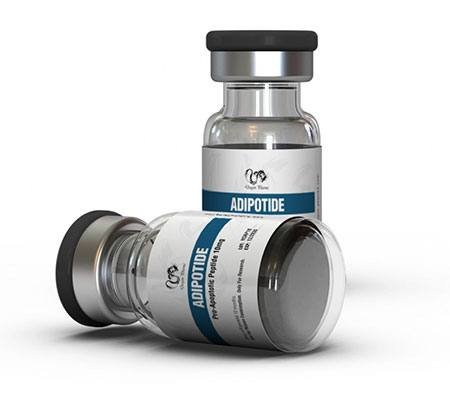
Adipotide
Adipotide 10 mg 10 ml | 1 vial
- Ingredient:Adipotide
- Manufacturer:Dragon Pharma
- Estimated Delivery : Up to 3 business days
- Free Shipping & Returns : On all orders over $300
Adipotide 10 mg represents a significant advancement in the realm of research compounds aimed at adipose tissue reduction. Unlike traditional fat burners that work systemically, Adipotide (also known as FTPP) is a synthetic peptide that functions through a targeted mechanism, specifically attacking the blood supply that sustains white fat tissue. This innovative approach has made it a subject of great interest within the research community, particularly for those exploring advanced body composition strategies.
The primary effect of Adipotide is the targeted apoptosis (programmed cell death) of white adipose tissue. It achieves this by homing in on and binding to two specific proteins that are highly prevalent in the blood vessels of fat tissue: prohibitin and ANXA2. This binding action triggers a cascade that disrupts the blood supply to the fat cells, effectively starving them of nutrients and oxygen. The result is a direct and localized reduction of stubborn fat deposits that are often resistant to diet and exercise alone.
For researchers observing its effects in model organisms, the most notable outcomes include a rapid decrease in overall body fat percentage, a significant reduction in the circumference of fat storage areas, and an improvement in metabolic markers. It’s important to note that a study published in the journal Science Translational Medicine highlighted this unique mechanism, demonstrating its potential for targeted fat loss without systemic central nervous system effects. Users often report that the fat loss appears “targeted,” making it a fascinating compound for studying spot reduction, a concept often debated in fitness circles.
Determining the correct Adipotide dosage is critical for research integrity. As a research chemical, it is not intended for human consumption, and all studies should be designed with appropriate safety and ethical considerations. In a laboratory setting, dosage is typically calculated in milligrams per kilogram of body weight.
A standard research protocol might involve a daily dosage ranging from 0.5 mg to 1.5 mg, administered via subcutaneous injection. A typical cycle lasts for a finite period, often 20 to 30 days, to observe the compound’s effects while managing the research parameters. The short half-life of approximately 4-6 hours necessitates a consistent daily administration schedule, sometimes even split into two doses to maintain stable plasma levels. Researchers are advised to start at the lower end of the dosage spectrum to observe the subject’s response before considering any adjustment.
A well-structured research cycle is paramount when studying Adipotide. A common and conservative cycle lasts for 20 days, followed by a significant break to allow the subject’s system to normalize. Due to its targeted yet potent mechanism, prolonged continuous use is not recommended in research models. A “2 weeks on, 2 weeks off” protocol is also sometimes employed to mitigate potential adaptive responses.
To support the body during a research cycle involving Adipotide and to achieve synergistic effects, researchers often stack it with other complementary compounds. For enhancing overall metabolic rate and fat oxidation, GW501516 is an excellent research companion. To support the body’s natural recovery processes and maintain joint and tendon health during periods of rapid compositional change, BPC-157 is frequently incorporated into the protocol. For those studying the synergistic effects of growth hormone secretagogues, adding Ipamorelin can provide insights into enhanced recovery and lipolysis. Furthermore, to manage any potential metabolic slowdown and support thyroid function in a post-cycle analysis, researchers may consider including T3 in their observational studies. Finally, for a comprehensive peptide-based body recomposition stack, TB-500 can be studied for its remarkable healing and regenerative properties.
Side Effects:
While Adipotide is a targeted peptide, research observations have noted several potential side effects that must be carefully monitored. The most commonly reported issue in experimental models is dehydration and related electrolyte imbalance, as the apoptosis of fat cells releases their contents into the system for disposal. This makes diligent hydration and electrolyte management a top priority during any research cycle.
Other observed effects can include a temporary increase in urinary output and thirst. Some models have shown minor, transient kidney stress, indicated by changes in specific biomarkers, which is why the cycle length is kept short and hydration is paramount. Nausea and a decrease in appetite have also been noted. Importantly, because Adipotide works by destroying fat cells, the released lipids can temporarily elevate blood lipid profiles. Researchers should have robust monitoring in place to track all these parameters. It is crucial to understand that this compound is strictly for research use in laboratory settings and is not meant for human consumption.
Proper handling of Adipotide is essential to maintain its stability and efficacy. The lyophilized powder should be stored in a cool, dark place, ideally refrigerated between 2°C and 8°C (36°F and 46°F) before and after reconstitution.
Be the first to review “Adipotide”
Related products
-
BPC 157
AUD$35 -
GHRP-6
Price range: AUD$25 through AUD$40 -
TB 500
Price range: AUD$40 through AUD$114 -
Ipamorelin
Price range: AUD$25 through AUD$45 -
Melanotan II
AUD$45
Reviews
There are no reviews yet.